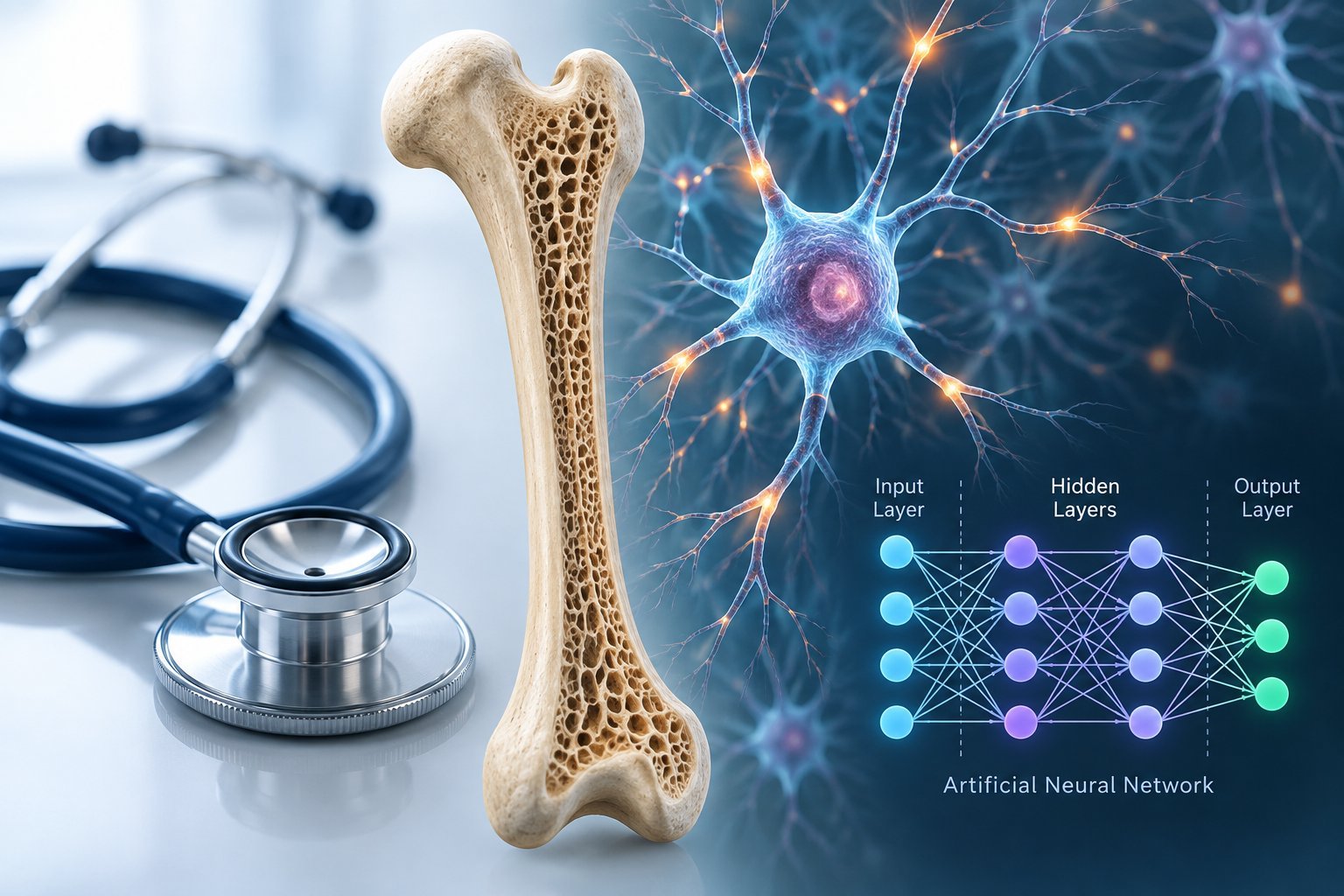
A smarter hospital begins with the patient’s journey.
A patient arrives with a problem. What happens next?
Registration. A queue. Vital signs. A conversation with the doctor. Investigations, reports, treatment and follow-up. Each step creates information. The challenge is helping that information travel with the patient, so the next person in the care team can use it.
That is the starting point for the work on this page: how can we connect everyday clinical care with the possibilities of AI?
Clinical intelligence comes first
A doctor listens to a patient’s story, notices a change in their gait, feels a swollen joint and interprets the findings together. Sight, sound, touch and sometimes smell contribute to a clinical picture shaped by knowledge and experience.
For software to support that work, relevant observations need to become usable data: a recorded symptom, a measured vital sign, a structured examination finding or an investigation result linked to the same patient.
Good clinical information gives AI something useful to work with. Capturing it well is a practical first step.
Follow the patient. See where the systems fit.
Explore the journey from the first request for care to registration, examination, investigations, diagnosis, treatment and follow-up. At each stage, we ask:
- What does the patient or care team need to do?
- What information should be captured, and how can it reach the next step?
- Where could a digital tool or AI assistant help?
- What decisions and checks must remain with the clinician?
The projects below connect these questions to specific workflows: clearer registration, coordinated queues, structured examination templates, combined datasets and clinician-reviewed decision support.
Together, they outline a practical direction for AI-ready hospitals in India, grounded in the work doctors, nurses, staff and patients already do.
Start with the patient journey below, then explore the systems that could connect it. The collection includes proposals, teaching examples and prototypes; each project explains its own scope.
Dr. Rakesh Kumar · Associate Professor of Orthopaedics, IGIMS Patna · View my academic profile, publications and courses →