What is the RVC slip?
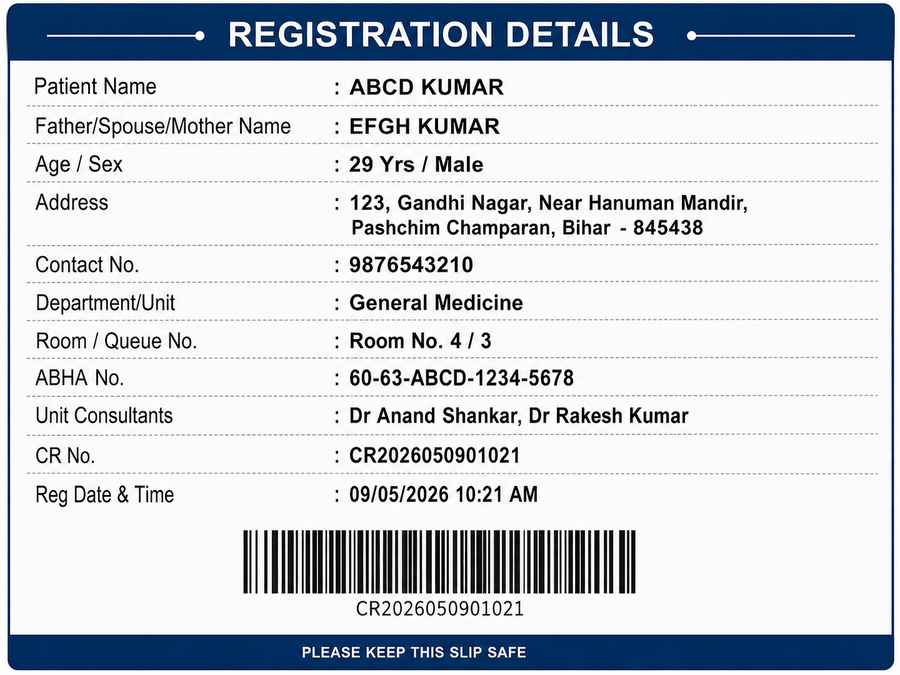
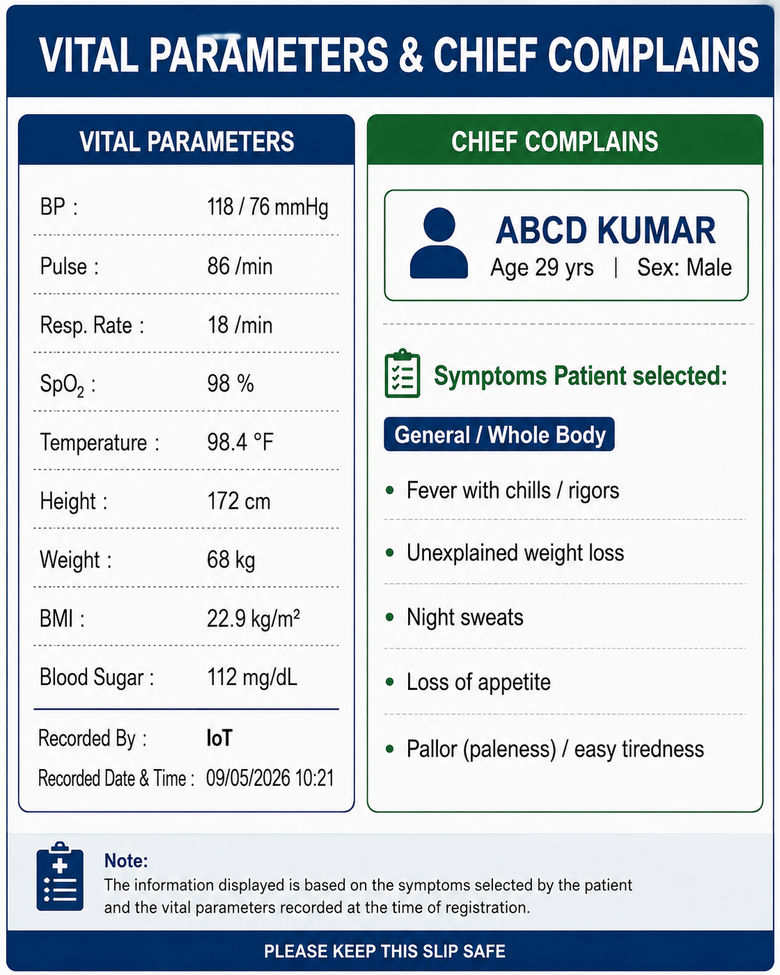
RVC stands for Registration, Vitals and Complaints. The proposal produces two linked printouts: one with registration details and another with the recorded vital signs and presenting complaints. The sample images below illustrate their layout.
How it would be generated
- Registration establishes the patient’s identity and records the reason for attendance.
- The vitals workflow adds available measurements, units, times and their source.
- The system brings the information together under the same patient identifier.
- The patient or attendant carries the printout to the doctor; a barcode can support record retrieval if that connection is implemented.
What the doctor should check
- The slip belongs to the patient being assessed.
- The presenting complaint is accurate and still current.
- The measurements have a time and can be interpreted in context.
- Missing information is visibly missing, rather than being mistaken for a normal result.
An everyday example
A patient arrives with a printed complaint summary and observations. The doctor can begin by confirming the problem and reviewing the readings, then add the examination findings and working diagnosis. The slip supports the consultation; it does not replace it.
Where AI could fit later
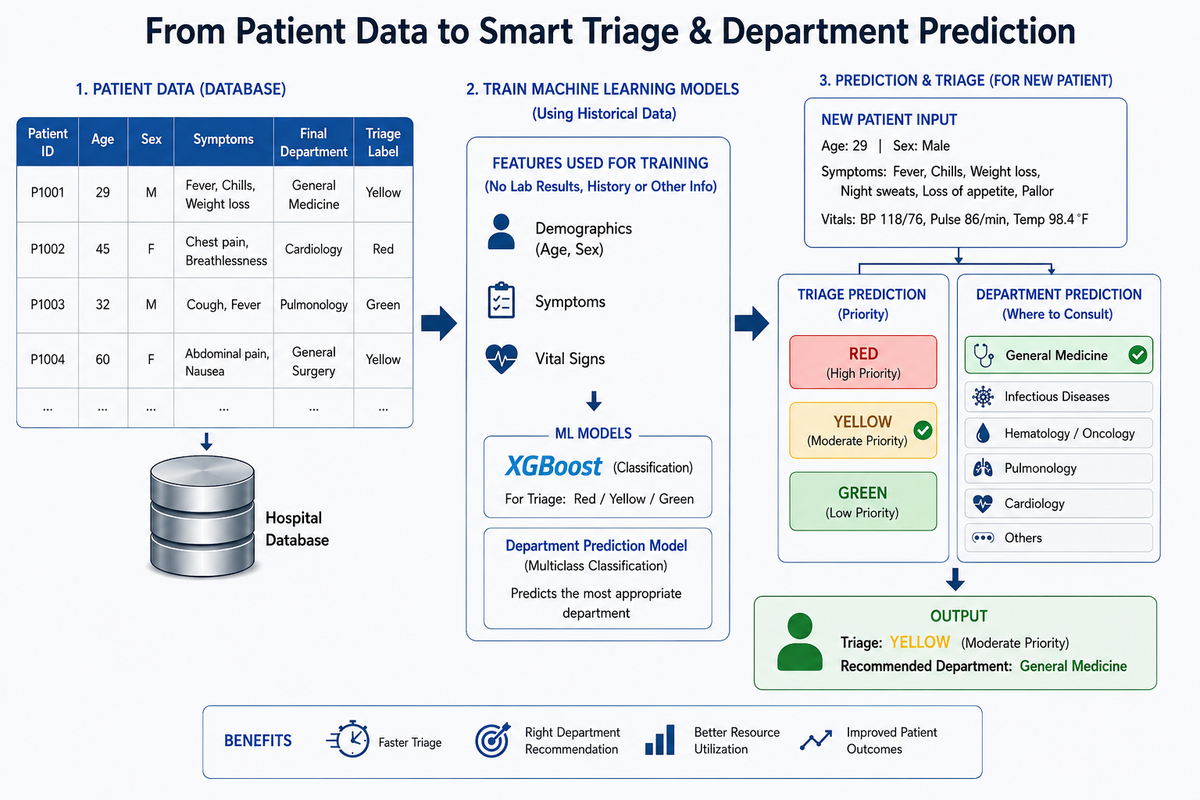
The model diagram illustrates using registration symptoms and measurements to suggest a priority category and possible department. XGBoost is one example of software that learns patterns from tables of labelled records. The diagram does not demonstrate a trained or validated triage system.
Any prediction would need appropriate clinical review. Information collected later in the visit must not be treated as if it had been available at registration when evaluating such a model.
Current scope
These are sample outputs and an illustrative model design. Automatic printing, barcode retrieval and prediction would require working connections to the hospital systems and evaluation before use.
Project diagrams and sample outputs