The clinical problem
A doctor may start a consultation without a recent weight or complete set of vital signs. Measurements may also be copied between paper slips and digital records. This project proposes a station that captures and records them in a consistent format.
What it would record
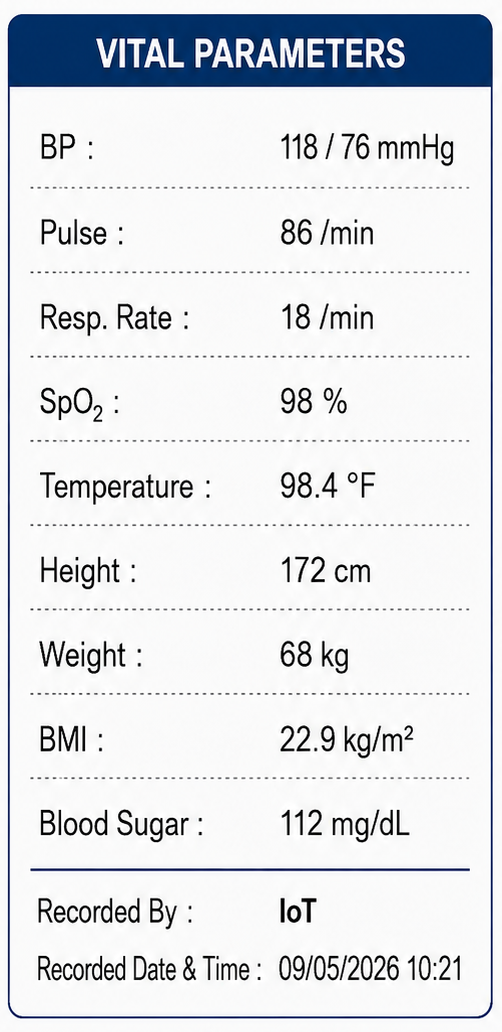
The example output includes blood pressure, pulse, respiratory rate, oxygen saturation, temperature, height, weight, calculated body mass index and blood glucose. Each value needs a unit, a time and a source. Glucose requires its own sampling and measurement process; it is not obtained automatically from the other sensors.
How it would fit into the visit
- Identify the patient and link the session to their registration record.
- Take the appropriate measurements using supported devices and assistance where needed.
- Check unusual or unreliable readings and record any measurement that could not be obtained.
- Make the results available on the doctor’s screen or printed slip.
- Follow the hospital’s process for bringing concerning findings to a clinical team.
Patients who cannot stand on a scale
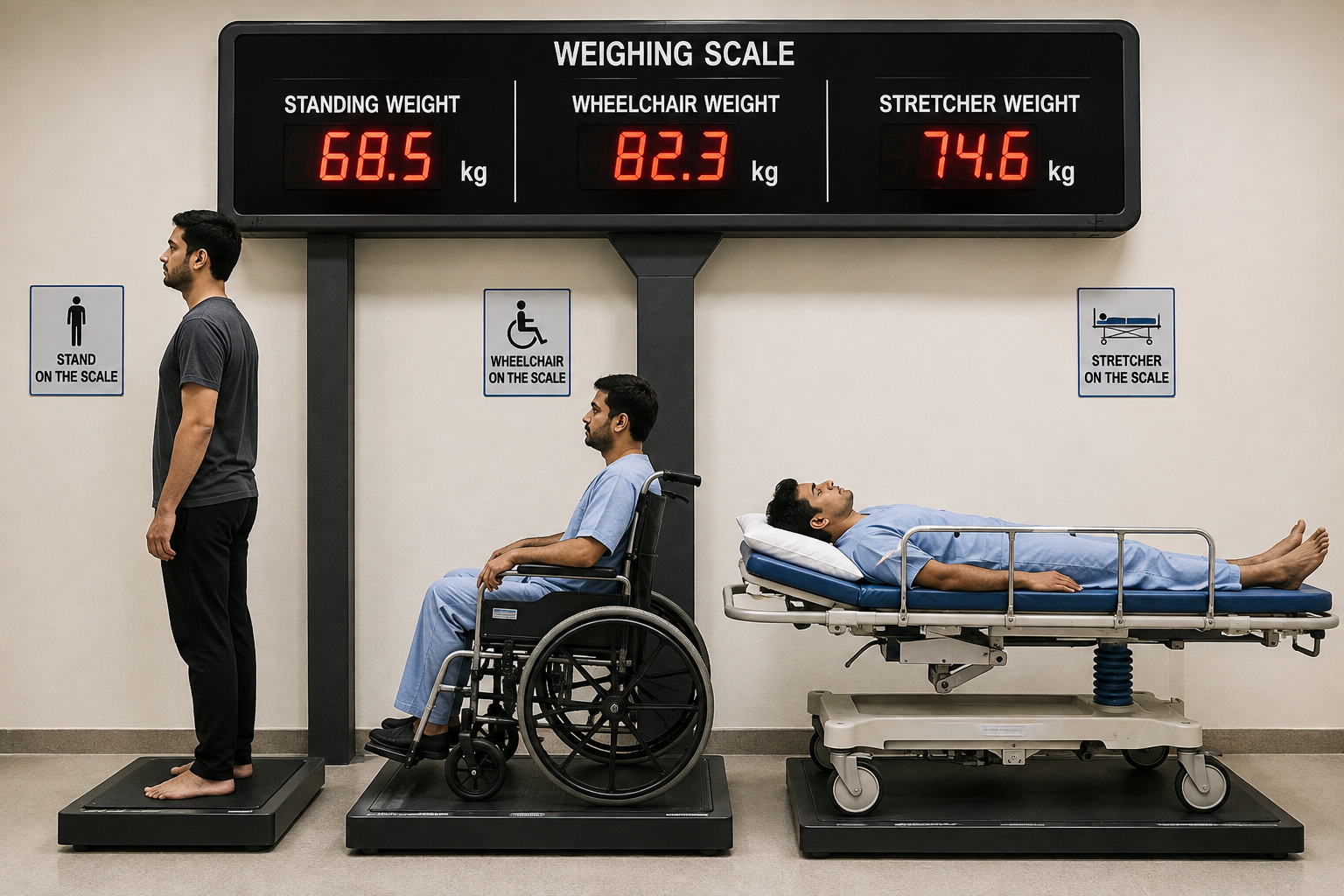
The hardware illustration shows three weighing options: standing, wheelchair and trolley. For wheelchair or trolley weighing, the equipment’s weight must be accounted for. This is a proposed equipment arrangement, not evidence that every measurement can be obtained automatically in every patient.
What matters to the doctor
The record should distinguish a device reading from a manually entered value and show when it was obtained. If a measurement appears inconsistent with the patient’s condition, staff should be able to repeat or correct it without losing the original entry.
Current scope
The kiosk, device connections and any AI-based prioritisation are proposals. Real use would require suitable equipment, maintenance, staff workflows and evaluation in the intended setting. A kiosk must not become a mandatory stop before urgent clinical assessment.
Project diagrams and sample outputs