Where it fits in the consultation
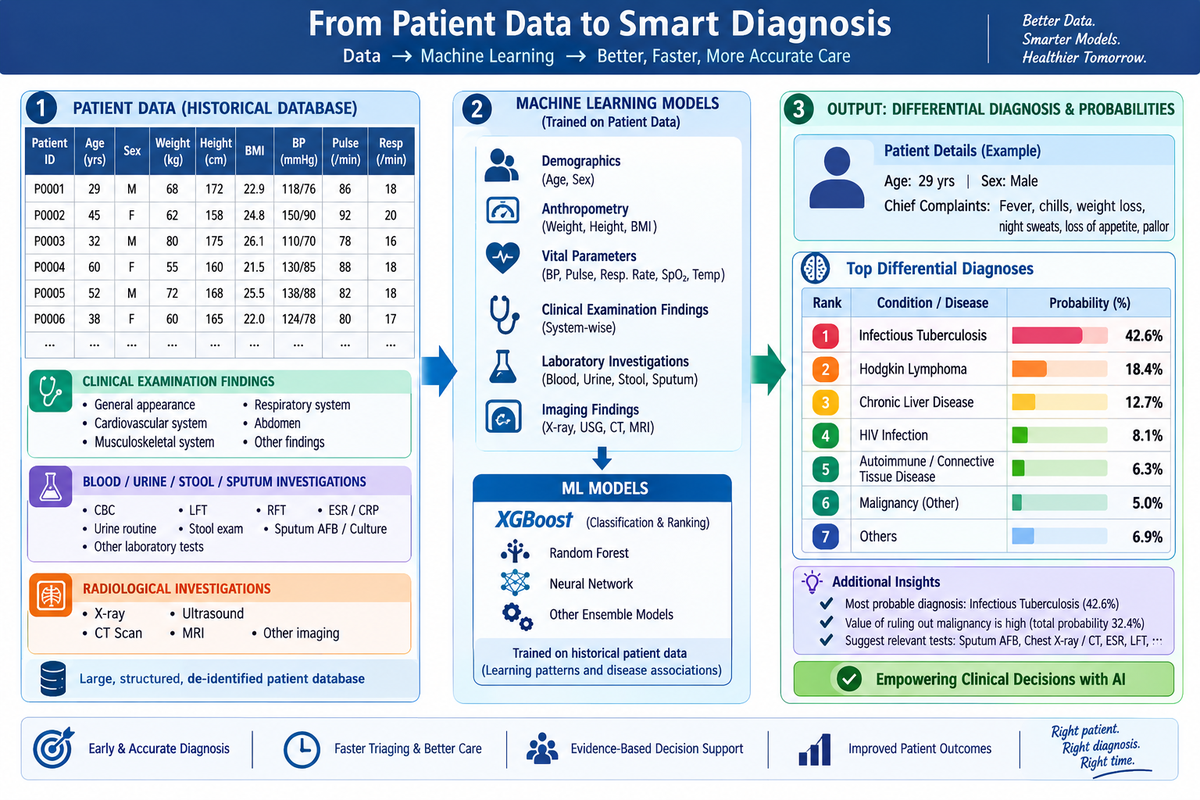
By this stage, the doctor may have history, examination findings and some investigation results. The proposed tool would organise those inputs and offer a differential diagnosis. It would support the doctor’s review of the case.
What the proposed output would contain
- A ranked list of diagnostic possibilities, rather than an automatically confirmed diagnosis.
- The findings that contributed to each suggestion.
- Missing or uncertain information that may affect interpretation.
- Conditions or unresolved questions for the clinician to consider when deciding the next step.
A sensible review sequence
- Confirm that the inputs belong to the right patient and are current.
- Check the suggestions against the history, examination and available reports.
- Consider explanations the software may have missed.
- Accept, revise or reject suggestions and document the doctor’s assessment.
How to interpret a score
A prediction score is a software output, not a diagnosis. A number presented as a probability should not be treated as a reliable estimate for an individual patient unless that use has been appropriately evaluated. This project does not provide such performance evidence.
An everyday example
The doctor sees a list of possible explanations for a patient’s complaint. One suggestion is inconsistent with an important examination finding. The useful response is to review the underlying record and clinical reasoning, not to select the first item because it is ranked highest.
Current scope
This page presents an illustrative architecture and proposed workflow. It does not demonstrate a validated diagnostic model. The working and final diagnoses entered in the clinical record remain the treating clinician’s responsibility.
Project diagrams and sample outputs