Why this matters in practice
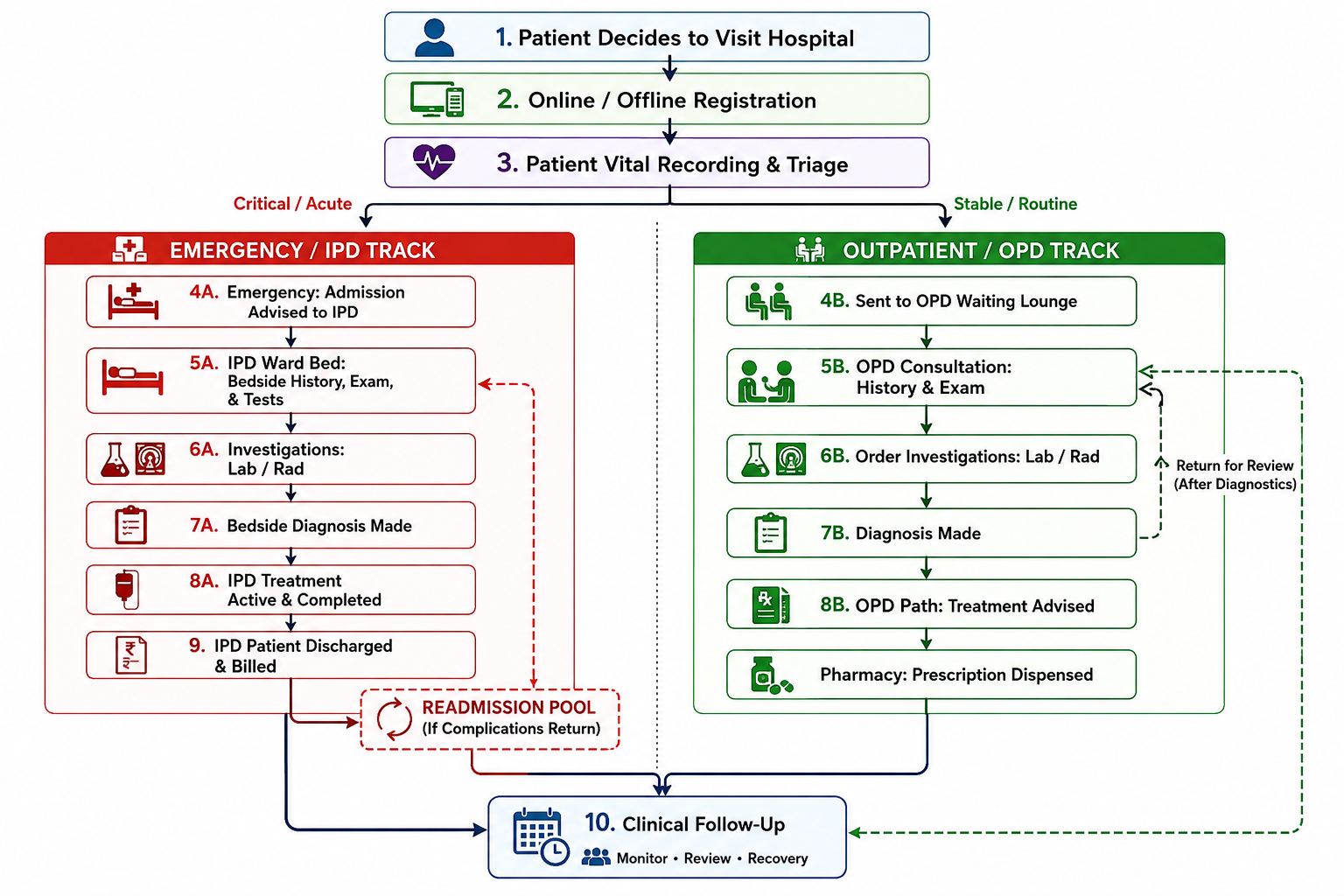
A patient may meet a registration clerk, nurse, doctor, laboratory team, radiographer and pharmacist during one episode of care. Each person sees part of the visit. This project maps the whole journey so that the patient and their information can move together.
For a doctor, the practical question is: what has already been done, what is still needed, and who should take the next step?
Read the journey in five stages
- Arrival and first assessment: establish identity and assess urgency. A patient needing immediate care should follow the hospital’s emergency pathway without waiting for routine registration.
- History and examination: record the presenting problem, relevant findings and a working diagnosis.
- Investigations and review: request appropriate tests and arrange how results will return to the treating team.
- Treatment and handover: document the agreed plan, medicines, procedures or admission requirements.
- Discharge and follow-up: explain what happens next, when the patient should return and who will review pending results.
OPD and Emergency/IPD: two routes through the same hospital
A stable OPD patient may move from consultation to investigations and back to the same doctor before collecting medicines. An Emergency or inpatient visit may involve admission, repeated assessments, treatment and discharge planning. These are simplified pathways: actual care may overlap, repeat or change direction.
Both routes need a clear record of decisions, responsibility for outstanding work and a plan for follow-up.
An everyday example
An OPD patient has a consultation and is sent for imaging. The visit is not complete when the image is taken. Someone must ensure that the result is available, the doctor reviews it and the patient understands the revised plan. The map helps make that return step visible.
How to use this project
Use the diagram to discuss handovers with your team. Mark where information is re-entered, where patients become unsure of the next step and where results can be missed. The linked projects below describe individual parts of this journey. This is a workflow overview, not a fixed protocol for every patient.
Project diagrams and sample outputs